Thoughts on Neil and Glenys Kinnock (National Portrait Gallery)

Andrew Tift’s portrait of Neil and Glenys Kinnock, exhibited in the National Portrait Gallery, is clearly within the tradition of portrait painting going back to the eighteenth century. In the background are objects that tell us about the sitter. The bust of Bevin leaning towards us, and the bust of Nelson Mandela next to the one of Neil Kinnock. A comic book on the table is titled Too Much and might be a comment on aspects of Neil Kinnock’s political life. On the shelf is a row of classic novels representing culture and learning, which contrast with the decorated cups n the coffee table depicting the modern and the domestic.

Glenys Kinnock is at ease, which is represented by her casual clothing and she looks with pride and tenderness at her husband. In contrast, Neil Kinnock looks at the viewer with a slight regret and puzzlement and wearing a red jumper reminder of his socialist roots. At the side is a fragment of a picture which shows Neil and Glenys under the words people and the rose which symbolised Kinnock’s years with the Labour party. Is it significant that the image is in black and white symbolising the past and what the Labour Party was?

Further Information
http://www.commissionaportrait.com/artistsportfolio.asp?id=105

http://www.npg.org.uk/collections/search/portrait.php?sText=kinnock&search=ss&OConly=true&firstRun=true&LinkID=mp59009&rNo=0&role=sit

Priscilla Queen of the Desert (Palace Theatre, 18th July 2009)

Going to see Priscilla Queen of the Desert is more than going to see a show it is about taking part in an experience. You can take in your champagne and pop the cork, order an interval cocktail or buy a fake pink feather boa to display through the show. As you enter the auditorium you are confronted with a large (phallic) lipstick and Australia represented as lips. Yes this sets the tone of what is a loud, bright, entertaining and feel good afternoon/evening full of one line jokes and sexual innuendo.
Priscilla adopts a pantomime structure to construct narrative. I say this, not just because men dress up as women, but in the way the production builds on small episodes which reflect each other. The three drag queens (Jason Donovan, Oliver Thornton and Tony Sheldon) leave the safe domesticity (Sydney) for the journey into the unknown (the Australian bush) to confront the baddies. As well as journeying, there’s also a quest. Tick/Mitzi (Jason Donovan) has to get to Alice Springs in a battered old bus to meet his son Benji. Each scene is a variation of the one before, but more sparkle and glamour and then there is the big finale and everyone lives happily ever after. There’s even the moment, in most pantomimes, where the audience get on the stage and join in. There’s the in jokes, particulary when it comes to a mention of the Austrailian soap Neighbours and Kylie. We get a sense of Kylie’s career, but also how far Jason Donovan has moved on, even though, it felt that, he still looks the same as he did when he was Scott Robinson.

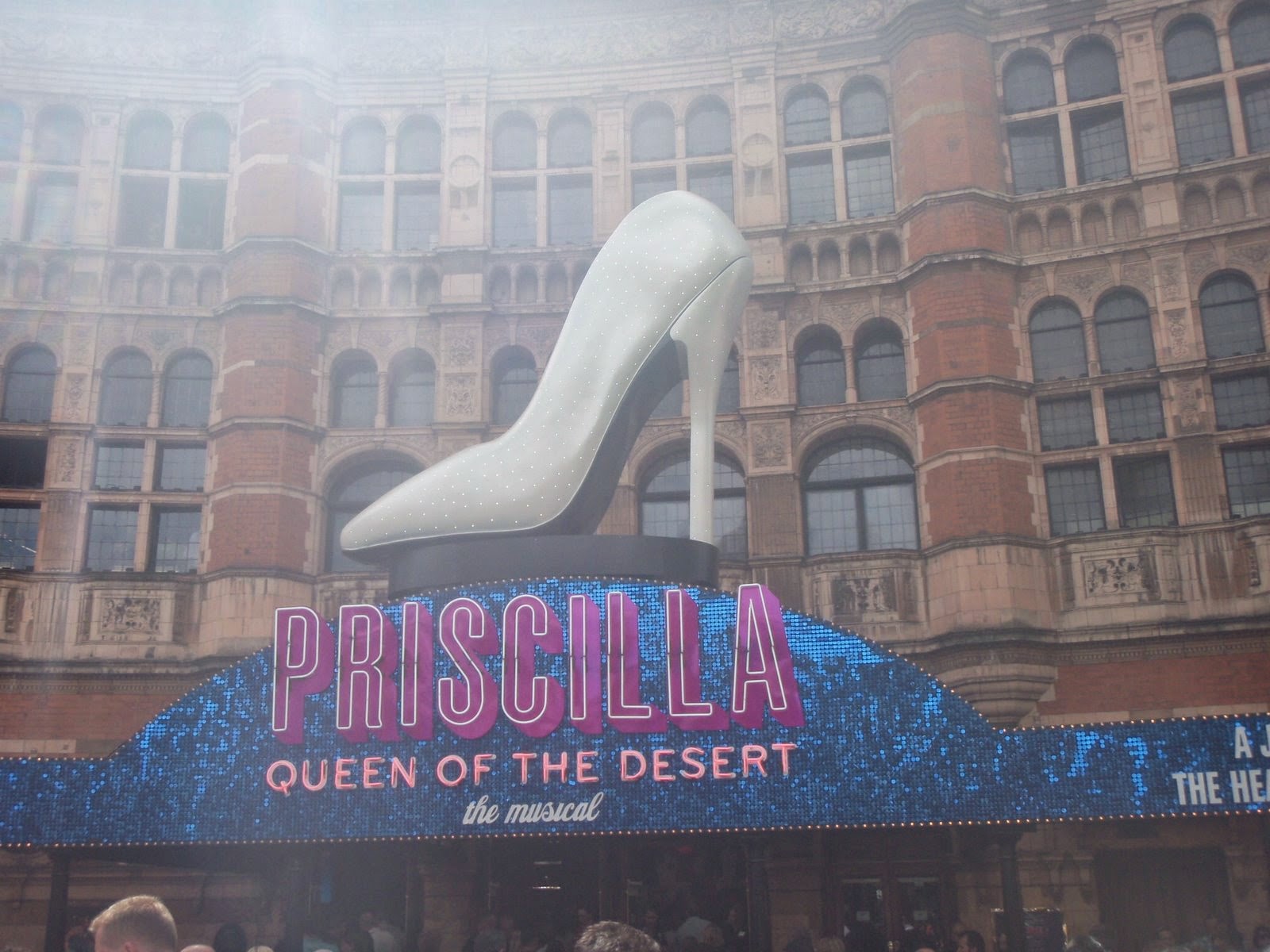
There was an additional moment of excitement when I saw Priscilla and the mechanics broke down after Oliver Thornton was performing Follie! Delirio Vano E Questo! and Sempre Libera on top of a Jewel encrusted stiletto shoe which was positioned on the roof of tour bus. He was stuck up there for longer than he should. There was a bit of ad libbing and they got him down in the end.

As part of the experience it had to end with a standing ovation. Great songs, spectacular costumes and lot a glitz and glamour. It felt like a day off.

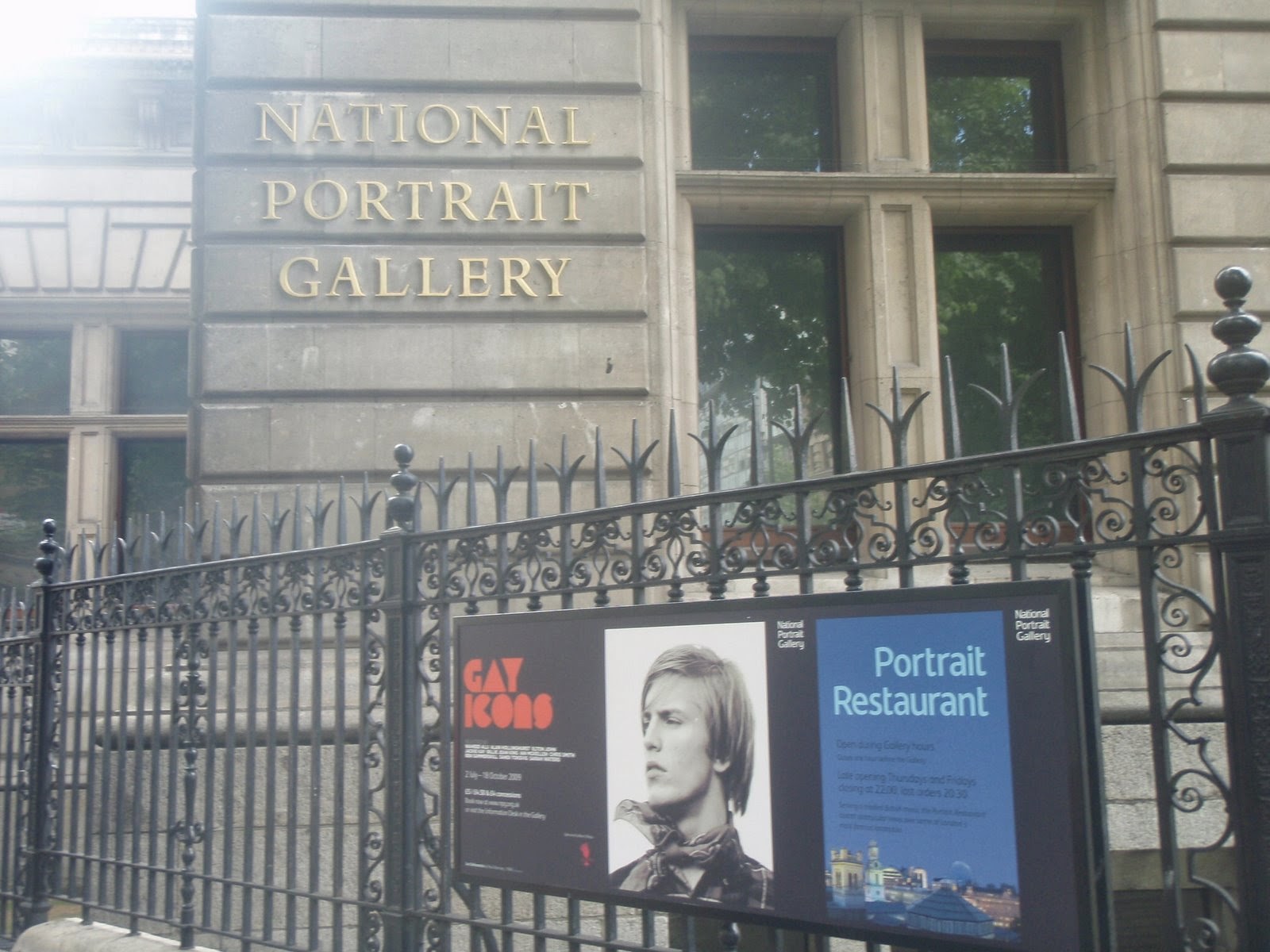
Gay Icons (National Potrait Gallery, 18th July 2009)

I really like visiting the National Portrait Gallery because I feel that I am getting close to people in a non intrusive way. I particularly enjoyed the Gay Icons exhibition for three reasons. Firstly, my interest in the ten panel members who made the selections, secondly for their selections, and thirdly for the reasons for their selections.

The panel of artists, writers, entertainers, athletes, campaigners and politicians are icons themselves. Chaired by Sandi Toksvig, the panel had to make a selection of their icons, but also include a portrait of themselves. I found the images of the panel as interesting as the ones the panel members chose and I found their lives as interesting.

The icons chosen by the panel are a mix of people from different walks of life, but are remarkable and have contributed enormously to art and politics. I loved the photograph of Martina Navratilova and the comment that accompanied it. That ‘knowing look’ was so inspiring. The photograph of KD Lang was mesmerising and captures a unique beauty. The champion tennis player, Billie Jean King chose to display images of people close to her, whilst Elton John chose people who had reached the top of their fields such as the former England manager, Graham Taylor and John Lennon.

The short descriptions of why the images were chosen were often personal and celebratory, recognising both the achievement of the person chosen and the personal reasons why the panel member had chosen the person as an icon. Chris Smith chooses the writer, Virginia Woolf who killed herself as two other people in his selections. Sandi Toksvig displays a portrait of the activist Peter Thatchell because of his campaigning work. In contrast, Lord Waheed Alli’s selection included entertainers who inspired and entertained a generation such as Village People and Will Young, but he also includes the Paul O’Grady character Lily Savage. I wasn’t sure if he meant Lily Savage or Paul O’Grady. I thought Lord Ali was the most interesting person in his selection, and I think this was why this exhibition is so good. It is of interest on a number of levels and I moved quickly round as I was so inquisiive to see who had been chosen and why.

Reviews and Previews

Gay Icons (Observer)
Gay Icons (Newsnight Review)
Gay Icons (Evening Standard)
Gay Icons (Times)
Gay Icons (Guardian)

Catalogue

Dyer, Richard and Toksvig Sandi. (2009) Gay Icons. London: National Portrait Gallery

Further Information

Gay Icons on the National Portrait Gallery Website

My thoughts on..Arthur Hughes' Ophelia (Manchester Art Gallery, 15th July 2009)

When visiting Manchester Art Galley, I spent some time in front of Arthur Hughes’ Ophelia which is a fascinating image illustrating the moment just before Ophelia drowns in the ‘weeping brook’. The shape of the canvas draws attention immediately to the image and the words on the frame are a reminder of Shakespeare’s language, but not quoting directly from the play.

For me Arthur Hughes’ Ophelia looks like a girl on the edge of death as she totters on the bank of the river facing the stagnant water. It’s as if the evening turning from dusk to dark is a metaphor for the end of the girl’s life. The image is of the fragile consumptive girl who seems to be both alive and dead at the same time. Her skin is grey and her white dress seems like the shroud that will wrap her up in death. The bat flies ominously in the lower left of the painting and the flowers, which bring spots of colour to the image, are wilting and dieing. The bluebells fall into Ophelia’s lap and others, which are destroyed, float limp on the water’s surface.

It’s still hard to believe that Hughes’ Ophelia was exhibited at the same time as Millais’. They are such different images, yet neither can be described as realistic, and are of the artist’s imagined view of Gertrude’s reported speech. I feel that Hughes’ is a much more pessimistic image than Millais’ because there is no sense that Ophelia will be at peace in death.

Explore further

http://www.manchestergalleries.org/the-collections/search-the-collection/display.php?EMUSESSID=c39e97fc7afc1ed005d2700fb11a8482&irn=6087&textsize=large