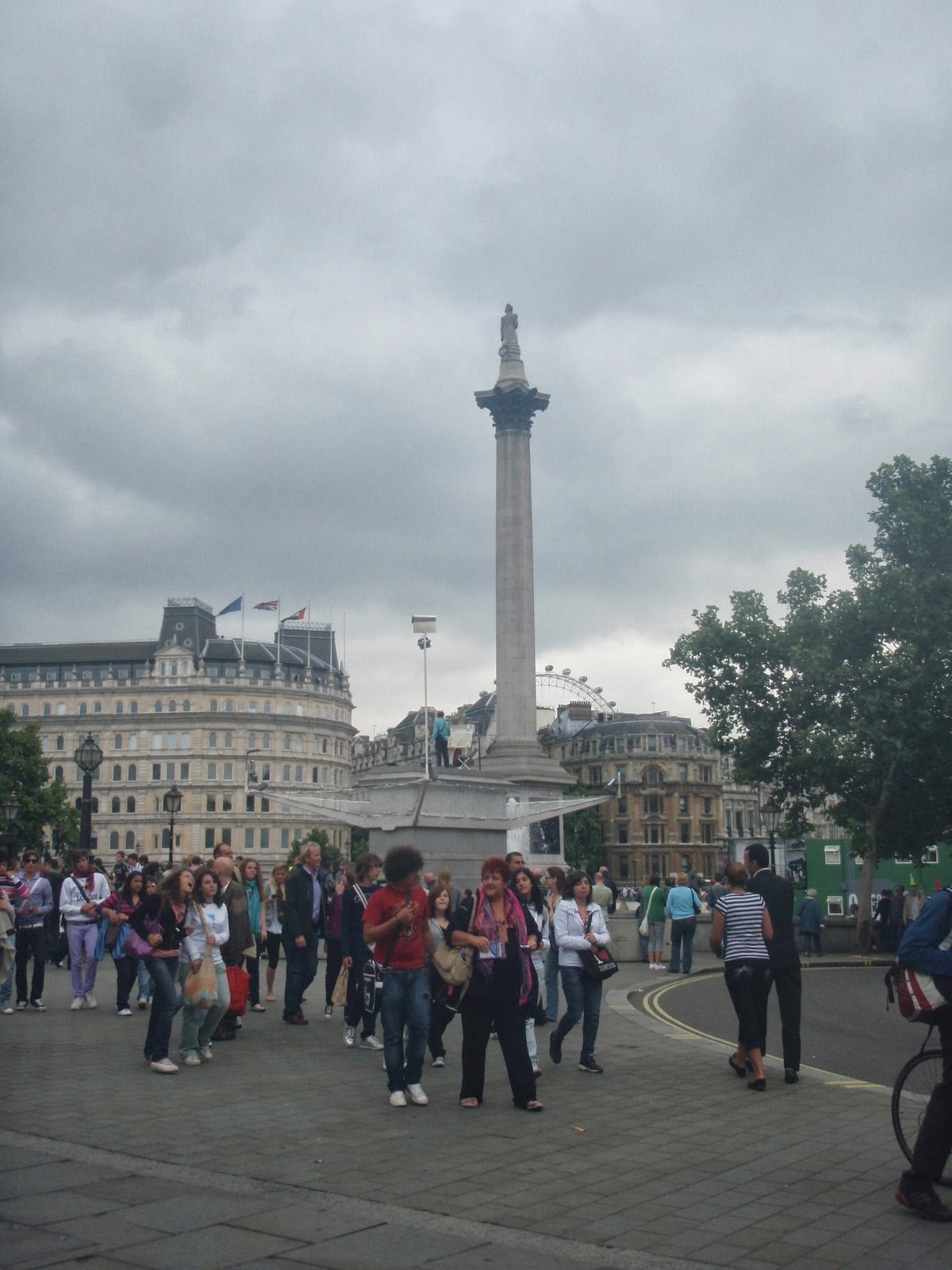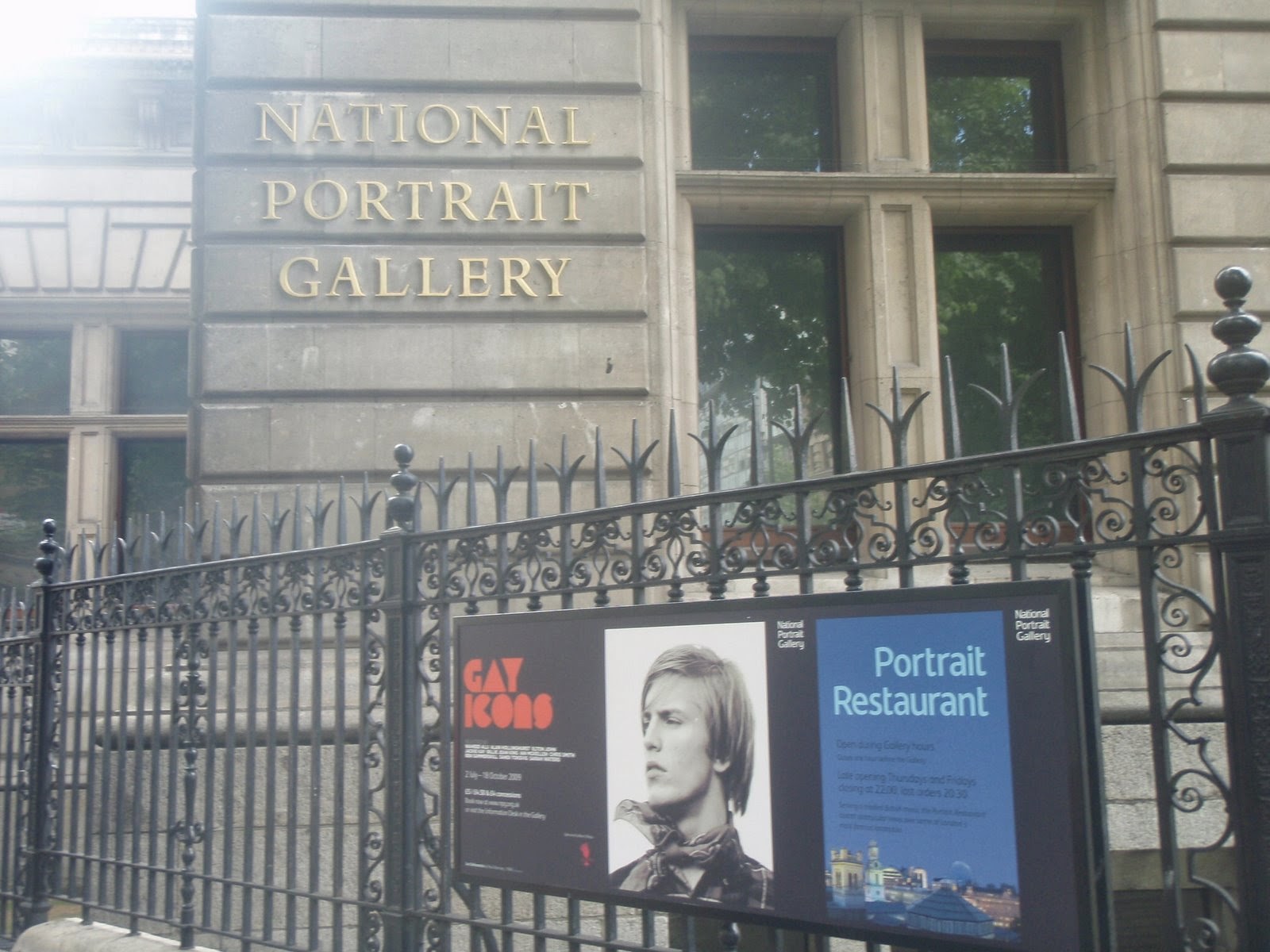
Gay Icons (National Potrait Gallery, 18th July 2009)

I really like visiting the National Portrait Gallery because I feel that I am getting close to people in a non intrusive way. I particularly enjoyed the Gay Icons exhibition for three reasons. Firstly, my interest in the ten panel members who made the selections, secondly for their selections, and thirdly for the reasons for their selections.

The panel of artists, writers, entertainers, athletes, campaigners and politicians are icons themselves. Chaired by Sandi Toksvig, the panel had to make a selection of their icons, but also include a portrait of themselves. I found the images of the panel as interesting as the ones the panel members chose and I found their lives as interesting.

The icons chosen by the panel are a mix of people from different walks of life, but are remarkable and have contributed enormously to art and politics. I loved the photograph of Martina Navratilova and the comment that accompanied it. That ‘knowing look’ was so inspiring. The photograph of KD Lang was mesmerising and captures a unique beauty. The champion tennis player, Billie Jean King chose to display images of people close to her, whilst Elton John chose people who had reached the top of their fields such as the former England manager, Graham Taylor and John Lennon.

The short descriptions of why the images were chosen were often personal and celebratory, recognising both the achievement of the person chosen and the personal reasons why the panel member had chosen the person as an icon. Chris Smith chooses the writer, Virginia Woolf who killed herself as two other people in his selections. Sandi Toksvig displays a portrait of the activist Peter Thatchell because of his campaigning work. In contrast, Lord Waheed Alli’s selection included entertainers who inspired and entertained a generation such as Village People and Will Young, but he also includes the Paul O’Grady character Lily Savage. I wasn’t sure if he meant Lily Savage or Paul O’Grady. I thought Lord Ali was the most interesting person in his selection, and I think this was why this exhibition is so good. It is of interest on a number of levels and I moved quickly round as I was so inquisiive to see who had been chosen and why.

Reviews and Previews

Gay Icons (Observer)
Gay Icons (Newsnight Review)
Gay Icons (Evening Standard)
Gay Icons (Times)
Gay Icons (Guardian)

Catalogue

Dyer, Richard and Toksvig Sandi. (2009) Gay Icons. London: National Portrait Gallery

Further Information

Gay Icons on the National Portrait Gallery Website

My thoughts on..Arthur Hughes' Ophelia (Manchester Art Gallery, 15th July 2009)

When visiting Manchester Art Galley, I spent some time in front of Arthur Hughes’ Ophelia which is a fascinating image illustrating the moment just before Ophelia drowns in the ‘weeping brook’. The shape of the canvas draws attention immediately to the image and the words on the frame are a reminder of Shakespeare’s language, but not quoting directly from the play.

For me Arthur Hughes’ Ophelia looks like a girl on the edge of death as she totters on the bank of the river facing the stagnant water. It’s as if the evening turning from dusk to dark is a metaphor for the end of the girl’s life. The image is of the fragile consumptive girl who seems to be both alive and dead at the same time. Her skin is grey and her white dress seems like the shroud that will wrap her up in death. The bat flies ominously in the lower left of the painting and the flowers, which bring spots of colour to the image, are wilting and dieing. The bluebells fall into Ophelia’s lap and others, which are destroyed, float limp on the water’s surface.

It’s still hard to believe that Hughes’ Ophelia was exhibited at the same time as Millais’. They are such different images, yet neither can be described as realistic, and are of the artist’s imagined view of Gertrude’s reported speech. I feel that Hughes’ is a much more pessimistic image than Millais’ because there is no sense that Ophelia will be at peace in death.

Explore further

http://www.manchestergalleries.org/the-collections/search-the-collection/display.php?EMUSESSID=c39e97fc7afc1ed005d2700fb11a8482&irn=6087&textsize=large

Everybody Loves a Winner (Manchester Royal Exchange, 15th July 2009)

Yes of course, it would be possible to go to a Bingo Hall and have similar experience to watching the Manchester Royal Exchange’s production of Everybody Loves a Winner. The audience enters the stalls through an entrance lined with fruit machines, and once in the auditorium they are confronted with a replica Bingo Hall with the rectangular tables awaiting the players. Other entrances to the stalls are now fire exits. In my view, it’s not the point that we could go to a Bingo Hall to play bingo and not bother with this theatre visit, because even though the production gives the audience chance to play bingo, we also get a snippet into the lives of the people who visit and work at this particular Bingo Hall. Amongst the customers who queue for the morning, afternoon and evening sessions is Elsie (Joan Kempson) who causes problems for the hygiene team (toilet cleaners) and wants the world to stop at the moment before the last number is called. There’s Maureen (Sally Bankes) who wants to win so she can go and have a holiday in Sharm el-Sheikh. Maureen becomes competitive with audience members and she is so ambitious that if she wins, she will be going home drunk in a taxi while the rest of us are still on the bus. There’s Janice, the nurse, (Patti Clare) who brings her mother to the bingo, but also nurses her at home. There’s the staff, Debbie (Emily Alexander) and Joy (Amanda Henderson), with dreams of being models and pop stars, but have their future, according to the manager Linda (Sally Lindsay) ,starring them in the eyes in the shape of Elsie. Ian Puleston Davies’s bingo caller, Frank looks confident as he calls the numbers, but underneath he is uncertain and fragile.

There’s a reflection of the kind of work that comes out of the Hull Truck Company here. This production is funny, touching and definitely gets the audience involved.

Reviews and Previews

Everybody Loves a Winner (Independent on Sunday)
Everybody Loves a Winner (Times Review)
Everybody Loves a Winner (Independent review)
The Stage Review of Everybody Loves a Winner (The Stage)
Everybody Loves a Winner (Observer)
Everybody Loves a Winner, Manchester Royal Exchange (Financial Times)

JW Waterhouse (11th July, Royal Academy)


Mirrors, water, tapestries reflect the dreams and reveries of doomed women who are often wearily suffering from loss or are washed out with the pain of unrequited love. Some have suffered death and others are just about to. In contrast, the temptress uses the ice cool water to tease and lure men to sexual deviation and almost certain death.

The Waterhouse exhibition tells stories from Greek mythology, the Bible, Shakespeare and Tennyson on an epic scale using vivid and vibrant colours and producing large scale canvasses. The works often focuses on minute detail and are of transience and death alongside comments on art as a narrative tool.

I wrote lots of notes in response to each work, but I don’t want to describe each image here. The catalogue accompanying the exhibition does that well enough. I felt that visiting the exhibition was about experiencing the paintings as if gorging oneself on eating a whole boy of milk chocolates. The paintings, which at times were deeply unfashionable, make vivid a Victorian world excited by the spectacle and promoting itself through an aesthetic that gloried in being British. I walk round the paintings and I marvel at the technical skill, the bravery of the detail, the passion for the subjects, and also the eye for a commercial venture. All the things that make this exhibition fascinating and beguiling.

Review and Previews

Waterhouse

Waterhouse at the RA in the Telegraph

John Waterhouse

Catalogue

Prettijohn Elizabeth (et al). (2009) J.W. Waterhouse. The Modern Pre-Raphaelite Gronigen: Gronigen Museum